
Choosing a club is one of the most important decisions you’ll make in your child’s sporting life. Often, it’s made almost by accident: their friends go there, it’s close by, or it’s the club with the biggest name.
But the environment your child plays in matters more than almost anything else. When my own son, aged seven, suddenly didn’t want to play, it wasn’t football he’d fallen out with. It was that particular session. In a different environment, he was as happy as ever.
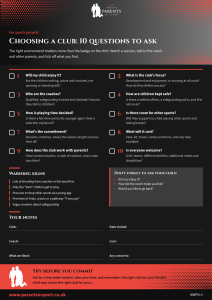
The right club helps children enjoy their sport, keeps them safe, and gives them the best chance of playing for life. Here are ten questions to ask before you commit.
Before you start: ask your child
What does your child want from their sport? Fun with friends, learning new skills, competing, or just being active? A club that suits a child who wants to compete every weekend may not suit one who simply wants to play.
The 10 questions
1. Will my child enjoy it?
Watch a session if you can. Are the children smiling, active and involved, or standing in queues and waiting their turn? Enjoyment is the number one reason children play sport, and the most common reason they stop when it goes.
2. What is the club’s focus?
Is the emphasis on development and enjoyment, or on winning at all costs? Ask how the club defines success at your child’s age. Clubs that focus on learning and improvement, rather than results and comparison, tend to keep children playing longer.
3. Who are the coaches?
Ask about qualifications, experience and training. Coaches working with children should have the appropriate safeguarding training and checks. But just as important is how they coach. Do they encourage, explain and listen, or shout? How do they react when a child makes a mistake?
4. How are children kept safe?
Every club should be able to tell you who their welfare or safeguarding officer is, and how to contact them. Ask about their safeguarding policy, first aid cover and how they handle concerns. A good club will be happy to answer. Vague or defensive answers are a warning sign.
5. How is playing time decided?
At younger ages, many clubs aim for fair or equal playing time. In more competitive environments, time on the pitch may be earned. Either way, the club should be able to explain how it works, so there are no surprises.
6. Is there room for other sports?
Will the club support your child playing other sports, especially when they’re young? Do they build in breaks and an off-season? Clubs that insist on total commitment to one sport at a young age may not have your child’s long-term interests at heart.
7. What’s the commitment?
How many sessions and matches a week? How far will you travel? How long is the season, and is there any time off? Be realistic about what works for your child, your family and school.
8. What will it cost?
Ask about fees, kit, travel, camps, tours and any extras. Hidden costs add up quickly. Some clubs offer help for families who need it, so it’s worth asking.
9. How does the club work with parents?
Is communication clear and regular? Is there a parent code of conduct, and do the coaches follow it themselves? Watch the touchline: is it calm and positive, or loud and full of instructions? The culture among parents says a lot about a club.
10. Is everyone welcome?
Does the club offer teams or sessions for girls? Does it welcome children of all abilities? How does it support children with additional needs or disabilities? An inclusive club is usually a happier club for everyone.
Warning signs
- Lots of shouting, from coaches or the touchline
- Only the “best” children get to play
- Pressure to drop other sports at a young age
- Promises of trials, scouts or a pathway, at a price
- Vague answers about safeguarding
Try before you commit
Most good clubs will offer a taster session. Use it, and take your time. Afterwards, ask your child:
- “Did you enjoy it?”
- “How did the coach make you feel?”
- “Would you like to go back?”
Their answers are the most important part of your decision.
Remember: the right club can change
The club that’s right at seven may not be right at 13. As your child grows, their needs, goals and interests will change, and that’s normal. If it stops working, our piece “Should I Stay or Should I Go?” can help you decide what to do next.
Choosing a club – 10 questions – WWPIS