We are delighted to announce a new partnership between Working with Parents in Sport and Performance Canteen.
Youth sport is more organised, structured and competitive than ever. There are more opportunities to train, more chances to play and better S&C provision, which means many young athletes are pushing themselves harder than ever before. Yet, we also see that nutrition still isn’t given the same significance. It is very often overlooked and undervalued and yet it provides the energy and building blocks to allow these kids to train and develop. It’s a key part of the training kit.
We see common problems across multiple sports: athletes arriving at early morning training without having eaten, energy intake regularly falling short of energy demands, kids surviving on energy drinks before training, mixed messages about nutrition from peers, coaches and social media. As a result, we’re observing an increased risk of injuries, stress fractures, burnout and kids losing their love of sport.
Parents frequently come to us as they are concerned whether their kids are eating enough and are finding it tricky to fuel them properly; a full day of school followed by intense training requires a lot of food, and getting kids from school to training to dinner creates logistical and practical challenges which often mean kids are under-fuelled.
Kate Shilland and Fran Taylor have spent years providing nutrition support across youth sport, from grassroots athletes to the elite, knowing what young athletes need to thrive and stay healthy. They know where the gaps are, what the main challenges are and, in turn, how to support parents, coaches and sporting organisations to manage these in realistic, practical terms.
This is why we have joined forces to connect to the thousands of families currently navigating youth sport.
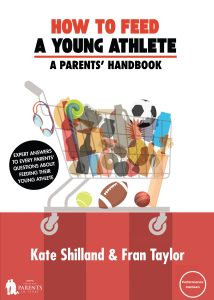
As our first project together, we have written “How to Feed A Young Athlete: a parents’ handbook – a comprehensive, practical and easy to read guide answering the most common questions every families ask, including:
- How much is enough?
- What should they eat before training?
- What about supplements?
- Managing fussy eaters who train intensively
- Warning signs your athlete isn’t eating enough
The book also features interviews and nutritional tips from sporting parents of youth athletes across a range of performance pathways.
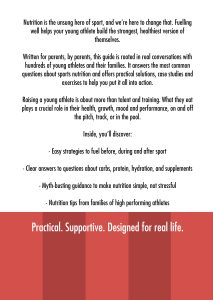
The book is now available for pre-order and will be released during the first week of March.
As part of the partnership, we are also launching,
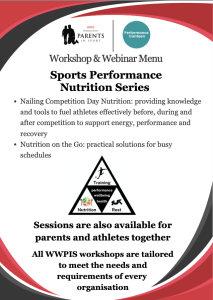
Educational workshops for parents to provide practical strategies that can be implemented immediately, along with courses for sporting organisations to embed quality nutrition support into their programmes to further supplement our offering here at WWPIS.
CEO Gordon MacLelland said, ‘ We are really excited by this partnership. We speak with thousands of families every year and we see the real-life challenges that they face. Nutrition is one of those areas where sports parents need reassurance, but reams of scientific information is not helping them.
They want and need practical solutions and ideas that reflect their day-to-day realities. Both the book and the workshops reflect this, not just what we think they should know, but what sports parents have asked for.
This is about bringing high quality parent facing support to this important area of youth sport to supplement the other work we already do with families globally across a whole host of different sports.
Fran Taylor and Kate Shilland (Performance Canteen) said, ‘We are thrilled to be partnering with Working With Parents in Sport. We work with sports families every day and know how confusing nutrition can feel; there’s so much information out there, and it’s hard to know what’s right.
What works is clear, practical advice that fits around school, training and busy family life. Our book and workshops deliver exactly that, shaped by the real questions and challenges sports parents bring to us daily.
This partnership lets us extend our parent-focused support across youth sport, giving families simple, trusted guidance exactly where it’s needed.’