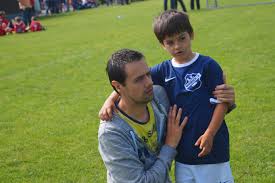
A large number of parents end up as their child’s sports coach at some point, some by choice, some simply falling into the role. We champion the parent-coach, because without them, a great many sports programmes simply wouldn’t exist.
It’s a genuine opportunity to bond further as parent and child, to be actively involved in their life, and, most importantly, to build memories that last for years.
I still remember my own father coaching me at mini rugby between the ages of six and eight. I can picture him now, kitted out in his tracksuit, smiling and encouraging every child who wanted to take part.
Researchers Weiss and Fretwell found something similar back in 2005: for the child, having a parent as coach can feel like extra attention, praise, and a kind of insider access the rest of the team doesn’t get, motivation and technical input that feels personal. For the parent, it’s a chance to pass on values and skills, to watch how your child gets on with their friends, and to take real pride in what they achieve.
That said, deciding to coach your own child is a decision worth thinking through properly. Here are a few things worth considering to keep the experience a positive one for everyone involved.

Before you volunteer, talk to your child about it. Ask how they’d feel about you being their coach, and check in with the wider family too. If it doesn’t feel right just now, you can always revisit it later or offer to help in less visible ways if you’d still like to be involved.
Know the difference between being the parent and being the coach. Can you genuinely separate the two hats? Your child needs to understand that when you’re coaching, every player gets treated equally but the moment you step back into being their parent, they need to know they still come first. It’s easy for this to blur without a bit of conscious effort, so it’s worth having a strategy in place before it comes up.
Try to strike the right balance between praise and criticism. I found this genuinely tough myself, probably too hard on my own child at times, and not generous enough with praise for the things that mattered. Plenty of coaches we’ve spoken to find this one of the hardest parts of the role, often worrying about how they’re perceived by other parents and players.
Think carefully about what you say to your child at home. Try not to discuss other parents or players with them, especially critically. It puts a young child in a genuinely difficult position, particularly if they’re close friends with the very players whose parents you’re talking about. Let your child form their own opinions of their teammates, they’re not your assistant coach, and children take their lead from what we say as much as what we do.
Work hard to be the role model this role demands. None of us can be perfect all the time, but coaching young people, and your own child especially, is a genuine privilege. Try to act in a way that would make your son or daughter proud to call you their coach as well as their parent. On the sideline especially, where the pressure often feels highest, remember your child isn’t the only one performing, your own behaviour sets the tone for everyone else watching too.
Don’t let coaching take over the rest of your life. Try not to spend the whole week rehashing last week’s match or building up next week’s “big game.” It’s too much for a child to carry, and too much for the rest of the family besides. Make sure there’s plenty going on together as a family that has nothing to do with the sport. It keeps everyone fresh, and stops the whole household resenting the commitment you’ve taken on.
Liz McColgan, the former Olympic and world 10,000m medallist, put a lot of this into practice when she began coaching her own daughter, Eilish. Having seen plenty of pushy parents over her own career, Liz made an early decision never to let Eilish feel she had to run. Eilish had to want it for herself, the same way Liz once had. For years, Eilish never came to her mother’s training sessions or races at all; the two were kept deliberately separate, with running kept fun and low-key at home until Eilish found her own way into the sport through school. Only once Eilish had stuck with it for a year, on her own terms, did Liz start coaching her properly.

Liz’s honest reflection on the harder side of it is worth sitting with too: the closeness that makes you a better coach for your own child, she says, is the same closeness that makes it far harder to watch them struggle or fall short. That protective instinct is natural, but it’s exactly the kind of thing worth being aware of before you take the role on.
I’ll finish with this: enjoy it. Without parent-coaches, the game simply wouldn’t exist in the form we know it, and most teams wouldn’t exist at all.
My advice, though, is not to coach your own child forever. Experiencing other coaches and other environments matters, especially if you started coaching them young. They may be genuinely glad to have you as their coach early on, but that can change as they get older.
Keep checking in. Keep the conversation open, and keep asking honestly whether it’s still working for everyone. Set aside real time to just be their mum or dad, cheering from the sideline instead — and when it’s time to let go of the coaching role, let them go.
As David Leadbetter, the world-renowned golf coach, put it: “When they get to a certain stage and they are keen to progress, hand them over to a qualified coach and let them do their job without interference. Support from afar.”
This piece ties in with our book Two Hats, featuring advice, support and encouragement for parent-coaches, including 23 interviews across 14 sports with leading figures from the sporting world. Harry Redknapp, one of the contributors, called it “a great privilege to be part of.”