I need to make one thing clear here, the same as I do at every presentation we run for clubs, coaches and parents: I’m not a happy-clappy, laissez-faire parent who doesn’t value winning and competition.
Anyone who knew me as a player or a coach will tell you winning always mattered to me, and it still does. When it comes to my own children, I want them to be as successful as they can possibly be.
Both of my children are naturally, fiercely competitive not something I taught them or built into the environment around them, just something most children bring with them anyway. So why do we get into such a muddle explaining winning and competition in children’s sport?
Winning, competition and development don’t have to be mutually exclusive. Managed well, and with a bit of creativity, all three can sit alongside each other successfully.

The moment we suggest winning isn’t the number one priority, a huge chunk of people switch off. That’s on us, not them, we haven’t done enough to inform and support parents and coaches about their actual role in a child’s sporting experience. Most are simply copying what they see on television, doing what they believe is the right way to support their child or their team.
History tells us that winning at a young age has very little bearing on what happens later. So why do so many of us, as adults, behave as though it’s the only thing that matters?
When we run our parent presentations, part of the session asks parents to write on a post-it note what they actually want their child to get from sport. Rarely does “become an Olympian,” “turn professional” or “win regularly” appear.
What does come up, again and again, is wanting their children to be well-mannered, hard-working, respectful, sociable, and healthy.
We then ask parents to reflect: do their own behaviours around matches and competition actually focus on, and celebrate, the things they’ve just written down?
Honestly, usually not. However good our intentions, once competition starts and our child is out there playing, winning has a habit of swallowing everything else.
We joke, though it’s not really a joke that the two most common questions sporting parents ask are “did you win?” and “did you score?” When the answer to both is no, that’s often the end of the conversation for another week. If we could find better questions instead, ones that invite reflection and celebrate the character traits parents themselves asked for on those post-it notes, we could start putting winning and competition back in their proper place.
We know that when children are asked why they play sport, winning and competing in tournaments rank far lower than they would if you asked the same question of the adults watching. That’s worth taking seriously, and worth using to question our own definition of success.
For anyone who worries that winning has to be everything, or that their child can’t reach the top without relentless competition from an early age, here are a few examples worth thinking about.
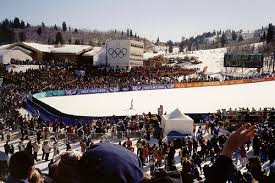
There’s a small town in Vermont, USA, Norwich with a population of roughly 3,000, that has sent a competitor to nearly every US Winter Olympic team since 1984. In total, it has produced 11 Olympians, including two Summer Games athletes, who between them have brought home three medals, one of them gold.
It’s a town that raises its young athletes collectively, prioritising participation over polish, and cooperation over rivalry. Children aren’t pushed to specialise in one sport, and it’s not unusual for them to cheer on the very athletes they’re competing against. The underlying belief, shared right across the community, is that youth sport exists to build a lifelong love of activity and the outdoors, along with life skills and friendships that outlast the sport itself. Parents in Norwich absolutely want their children to succeed — they just measure that success differently, trusting that the skills built along the way matter more than any single result.
Norway’s winter sports programme runs on a similar philosophy, and consistently punches well above its weight at medal time. Children play sport without keeping score, and without any real focus on winning and losing, until the age of 13. Once competition is introduced, fun and socialising stay firmly at the centre, even among the country’s top Olympic athletes.
In Iceland, the best coaches work with the youngest players, and clubs are judged on how many young people they keep involved in sport, not on trophies. The logic is simple: the more players who stay in the game into adulthood, the wider the pool from which top athletes eventually emerge. Skill development and participation come first. Iceland’s national team, and a growing number of its players now at top clubs across Europe, suggest nobody’s missing out under that approach and the national side has consistently outperformed expectations given the size of the country.
In Belgium, competitive league football is removed entirely below Under 11s. Children attend festivals every weekend instead, and teams are often mixed up on the day rather than kept as fixed squads. Belgian football has thrived under this system and produced a wealth of talent, largely because so few children are lost from the game along the way. The children want to keep playing.
It’s a system that still allows for competing, just with winning, losing and league tables pushed further down the list of priorities at that age. It’s a genuinely difficult shift to make, because parents are used to the old model, and so are coaches.
I’m not asking you, as a parent, to stop valuing or enjoying winning, to stop enjoying tournaments, or to stop encouraging your child to be competitive and strive to be their best. All I’m asking and it’s something I’ve genuinely had to work at myself — is to take a step back and ask: do I actually have winning and competition in their rightful place?
There’s nothing wrong with competition. It simply has to be suited to your child’s age and stage of development. Competing, at its core, means striving to do your best.
Children like to compete. When that becomes the entire emphasis, though, we know it does real damage to their motivation. None of us, as parents or coaches, should want to be responsible for that.